Lease of part of the lands of Clonmore from Edward Earl Digby to Lawrence Gorman for one life, or twenty-one years from 25 March 1825, at the yearly rate of £13-0-0.
Including 'A map of part of the lands of Clonmore in the Barony of Geashill and King's County. Part of the Estate of the Right Honourable Earl Digby. Surveyed by John Molloy 1827', hand coloured, scale 20 Perches to an Inch, with bordering land leased to John Purcel and John Colgan.
Clonmore
72 Archival description results for Clonmore
Lease of part of the land of Clonmore from Edward Earl Digby to John Purcell for three lives or 31 years.
Caretaker agreements with agreed weekly payments for premises in the townands of Killarles, Cappyroe, Ballyknockan, Cappanageeragh, Clonmore, Killellery, Ballinagar, Colehill, Knockballyboy, Bawnmore, Newtown and for Geashill Castle (front gate).
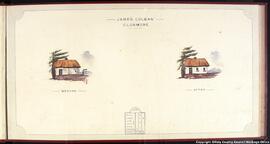
Before and after paintings of James Colgan's house, Clonmore.
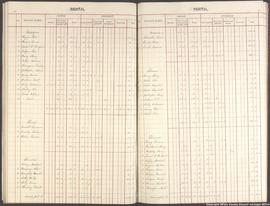
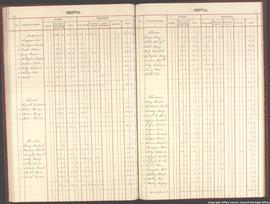
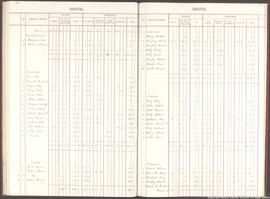
Annual report, accounts and rental for year ending June 1876, containing 'an entirely satisfactory' financial report with an absence of any outstanding arrears. Notes however that expenditure was high as the glebe lands of Killeigh were purchased from the Church Temporalities Commission for £950, and major drainage and reclamation works were completed at Cappyroe, Cappancur, Roskeen, Geashill glebe lands, Clonmore, and Killarles.
Forestry works included a new plantation at Aghanrush, and the clearance of twenty acres of the River Wood at Clonad of all decaying birch and timber, the construction of new drainage works therein and the replantation of the wood. Digby reports the same plan is in place for the wood at Derrygolan. Construction works included a new cattle shed for Mr Tottenham at Springfield; new offices for Mr Delamere in the Meelaghans; new stores for T. Fegan in Geashill Village due to increased trade; new forge in Killeigh and new offices for J. Buckley in Geashill Village and for Mary Hones in Cappancur, along with descriptions of other repairs and alterations.
Overall he reports the condition of the estate as 'prosperous' but warns of mischievous attempts 'to inspire the Irish tenantry with distrust of their landlords. '